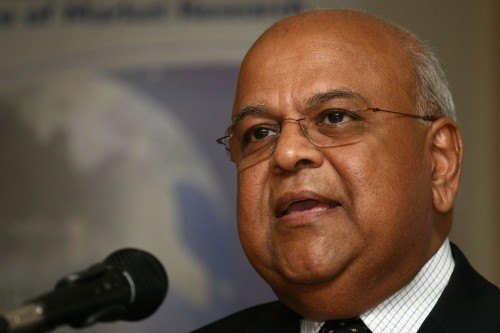
Most significant announcements related to tax changes and government expenditure cuts.
Ryk van Niekerk | 24 February 2016 14:20
The 2016 National Budget does not contain any significant change in policy direction, or contain major new announcements. It does however show government is serious about cutting expenditure without enforcing austerity measures on South Africans.
The most significant announcements:
Budget deficit is reduced to 3.2% of GDP, down from 3.9% achieved in 2015/16 tax year. The deficit will further decrease in the following two tax years to 2.8% and 2.4% respectively;
Government debt to rise by 11% to R2 trillion or 45.7% of GDP. Total debt will stabilise at 46% over the next two tax years;
No increase in personal income tax or VAT;
Increases in Capital Gains Tax;
Increased focus to centralize procurement to limit corruption;
Increased Treasury oversight of State-owned enterprises (SOCs) and the investigation of the sale of minority equity stakes to private investors.
Tax changes
Government will raise an additional R18.1 billion during the new tax year, and R15 billion each in the two following fiscal periods;
No increase in personal income tax (of 13.7 million registered taxpayers, fewer than 1 million individuals pay 64% of personal income tax revenue);
Tax relief of R5.5 billion to limit the impact of fiscal drag with the majority of the relief aimed at lower- and medium-income earners;
Increase in the effective capital gains tax rates for individuals (from 13.7% to 16.4%) and for companies (from 18.6% to 22.4%);
The fuel levy will increase by 30c/litre;
Total fuel levy on petrol will amount to R4,43/litre or 36.5% of pump price
Total fuel levy on diesel will amount to R4,28/litre or 45.4% of pump price
Government to implement a new tyre levy of R2.30 per kg from October 1;
Government to implement a new sugar tax from March next year;
Increase of transfer duties on property sales above R10 million.
Sin taxes
Duties on malt beer rises by 8.5% to R1,35 per 340ml can;
No increase in duties of traditional African beer;
Duty on unfortified wine rises by 8% to R3,31 per litre;
Duty on fortified wine rises by 6.7% to R5.82 per litre;
Duty on sparkling wine rises by 8% to R10,53 per litre;
Duties on ciders and alcoholic fruit beverages rise by 8.5% to R1,35 per 340ml can;
Duty on spirits rises by 8.2% to R4,08 per 750ml bottle;
Duty on cigarettes rise by 6.7% to R13,24 a packet of 20s;
Duty on cigars rise by 6.7% to R69.28 per 23g.
Government has committed to the following expenditure cuts:
Costs of travel, accommodation and conferences for public officials. The target is to save R1.6 billion over the next three years;
Vehicles for politicians; (Cost of new vehicles limited R750 000);
Government to renegotiate leases of properties;
Procurement reforms to achieve achieve savings of R25bn per year by 2018/19.
Economic prospects
Economic outlook
2014/15
2015/16
2016/17
2017/18
2018/19
Total GDP
R3,844bn
R4,073bn
R4,388bn
R4,751bn
R5,161bn
GDP growth
1.6%
0.9%
1.2%
1.9%
2.5%
Consumer price inflation (CPI)
5.6%
5.4%
6.6%
6.2%
5.9%
Fiscal framework
2015/16
2016/17
2017/18
2018/19
Total Revenue
R1,223bn
R1,324bn
R1,436bn
R1,571bn
Total expenditure
R1380bn
R1463bn
R1572bn
R1,695bn
Budget deficit
-3,9%
-3,2%
-2,8%
-2,4%
Debt as percentage of GDP
44.3%
45.7%
46.2%
46.2%
Debt service costs
R129.1bn
R147.7bn
R161.9bn
R178.6bn
Public wage bill
2015/16
2016/17
Total public wage bill (national and provincial departments)
R479bn
R509bn
Number of Employees (national and provincial departments)
1,316m
1,321m
SA has paid $150 million as part of $2 billion obligation to the New Development Bank. It was funded from the proceeds following the sale of government’s stake in Vodacom. The balance is to be paid over the seven years. In 2016/17 a further $250 million will be paid.