
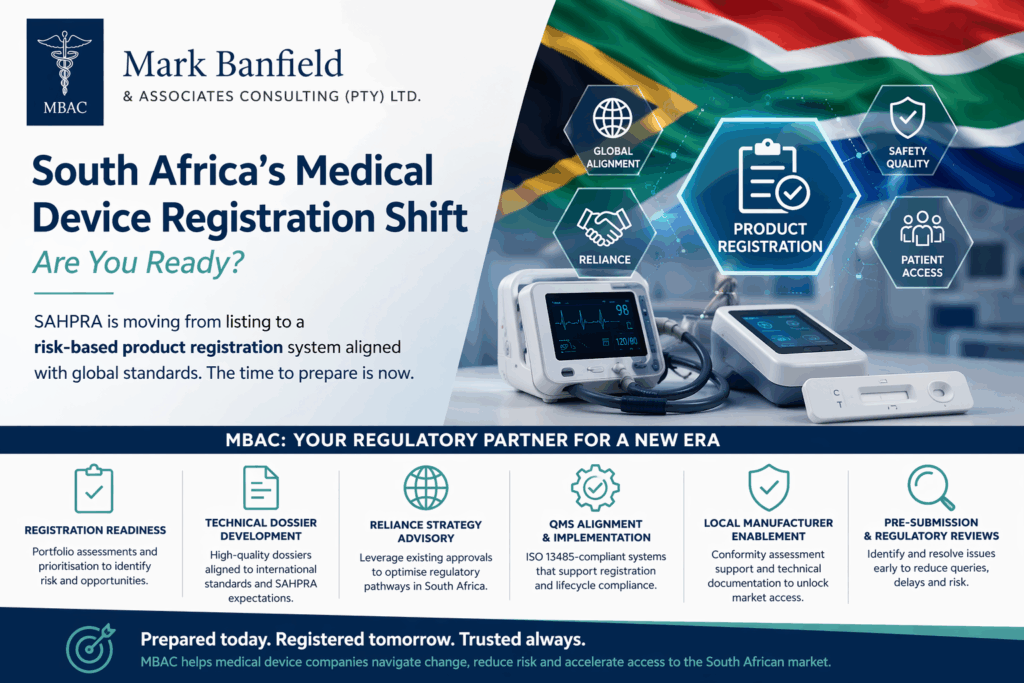
The recent Medical Device Registration Feasibility Study marks a clear inflection point in South Africa’s regulatory environment. For many years, the industry has operated within an establishment licensing framework based largely on listing and attestation. That model is now reaching its natural limit. The direction of travel is unmistakable: South Africa is moving toward a structured, risk-based product registration system aligned with international regulatory practice.
For medical device executives, the implication is straightforward. This is no longer a theoretical or long-term regulatory concept. It is a near-term reality that will materially affect market access, operational models, and competitive positioning.
At its core, the study confirms that SAHPRA is both ready and intent on implementing a phased registration framework, initially focusing on higher-risk devices and priority in vitro diagnostics, particularly those linked to the country’s significant burden of communicable diseases such as HIV and tuberculosis. The use of reliance on trusted international regulatory authorities is expected to form the backbone of this system, meaning that existing approvals from regulators such as the FDA or under CE marking will become increasingly important strategic assets.
However, the study also highlights a critical weakness across the current industry landscape: the quality of submissions. Poorly structured dossiers, incomplete documentation, and a general lack of understanding of technical requirements were recurring issues during the feasibility exercise. In a formal registration environment, these shortcomings will translate directly into delays, increased regulatory scrutiny, and in some cases, an inability to access the market altogether.
At the same time, the move toward a full cost-recovery model for regulatory activities signals that compliance will no longer be an administrative overhead. It will become a defined and measurable cost of doing business in South Africa. Combined with the introduction of structured digital submission systems and closer alignment with ISO standards and global regulatory frameworks, this points to a significantly more rigorous and transparent regulatory environment.
From a business perspective, this transition will reshape how companies approach the South African market. Time-to-market will increasingly depend on regulatory preparedness rather than purely commercial considerations. Portfolio decisions will need to take into account the cost and complexity of compliance. Local manufacturers, in particular, will face heightened expectations around conformity assessment and quality management systems, while distributors will need to strengthen their regulatory capabilities and partnerships.
The organisations that respond early to these changes will gain a distinct advantage. Those that delay are likely to encounter backlogs, extended approval timelines, and potential barriers to market entry.
In practical terms, executives should already be interrogating their portfolios through a regulatory lens. This means understanding which products are likely to fall into higher-risk categories, identifying where reliance on international approvals is possible, and determining where significant documentation gaps exist. It also requires a realistic assessment of whether current technical documentation meets internationally recognised standards, and whether internal systems and teams are equipped to support a structured registration process.
In our experience, many organisations underestimate the extent of the gap between their current state and what will be required. This is particularly evident in fragmented or outdated quality management systems, incomplete technical files, and the absence of a coherent regulatory strategy across the product portfolio. These are not insurmountable challenges, but they do require deliberate and timely intervention.
At MBAC, we have structured our advisory approach specifically to support clients through this transition from regulatory uncertainty to operational readiness. Our work typically begins with a comprehensive assessment of a company’s product portfolio, identifying regulatory risk, prioritising products for registration, and mapping realistic pathways forward. From there, we support the development and refinement of technical dossiers, ensuring alignment with international standards and SAHPRA expectations, while also addressing the practical realities of submission quality that the feasibility study has highlighted.
A critical component of this process is the development of a clear reliance strategy. Many companies hold valuable international approvals but lack a structured approach to leveraging these within the South African context. Translating those approvals into efficient, defensible regulatory pathways is an area where focused expertise delivers immediate value.
Equally important is the alignment of quality management systems. Registration is not a standalone activity; it is intrinsically linked to the broader lifecycle of the product, including post-market surveillance, risk management, and change control. Ensuring that systems are robust, compliant with ISO 13485, and capable of supporting regulatory submissions is essential for sustainable market participation.
For local manufacturers, the transition presents both a challenge and an opportunity. While conformity assessment and technical documentation requirements may appear onerous, they also provide a pathway to greater market credibility and access. Structured support in navigating these requirements can significantly reduce the barriers to entry and position local products more competitively.
Ultimately, what is unfolding is not simply a regulatory update, but a market reset. The introduction of a formal product registration system will reward organisations that are prepared, structured, and aligned with global best practice, while exposing weaknesses in those that are not.
The key question for leadership is therefore not whether change is coming, but whether your organisation is positioned to respond to it effectively. Those who act now will shape their regulatory future. Those who wait will be shaped by it.
If you are assessing your readiness or considering how these developments may affect your organisation, this is the right time to start that conversation.